The invention of railways changed the concept of communication system in world history, British scientist George Stephenson created an uproar around the world in the 1825s when the railways opened in Britain.
Just seven years later, the railway was launched in Madras, India in 1832. And in the present Bangladesh, the railway was launched in 1861. The railway line operated through the Darshana-Jagati route was reached in most of the districts of Bengal in the next 90 years.
But after the establishment of Pakistan in 1947, there was no improvement in rail communication and in the 1971 Liberation War, more than 100 small and 100 railway bridges were facing destruction.
After the independence of the country, Bangabandhu Sheikh Mujib tried to restore the system in the railways immediately after the independence of the country, and on October 12, 1972, Bangabandhu started the train again on the Hardinge Bridge.
But when Bangabandhu was killed on August 15, 1975, the railways of Bangladesh stopped under the prescription of the World Bank and the new railway construction and railroad sector was stopped.
From 1975 to 90, no new railway was built during the Gita-Ershad regime, and the losses were closed to one railway after another.
And in 1991, BNP-Jamaat power came and 10,000 officers and employees were laid off in the name of ‘Golden handshake’. This incident was crippled in Bangladesh Railways.
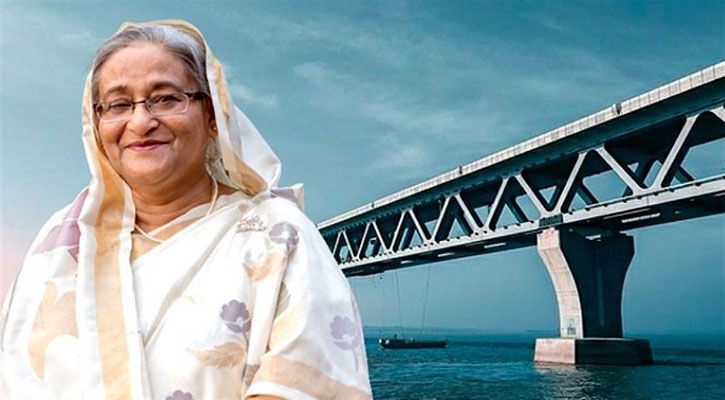
Then in 1996, Sheikh Hasina took oath as Prime Minister and then took several steps to rescue the sinking railway.
At the same time, 94 km railway was constructed from Bangabandhu Bridge East Station to Joydevpur Junction, while Sheikh Hasina took the initiative to convert the broad gauge section from the west to Jamoil through Jamail from the west to the Parvatipur section.
As a result of these groundbreaking projects of the Sheikh Hasina government, Bangladesh Railway has survived the extinction.
In this context, Prime Minister Sheikh Hasina said on February 9, after the killing of the father of the nation, the government has been trying to get the right to take the goods or improvements.‘
New horizon in railways in 2030
According to the railway sources, the current government led by Sheikh Hasina has built 740 km of new railways across the country in the last 14 years and has been converted from a single gauge railway to Dutelgaz.
On the other hand, the closed or damaged railway has been rebuilt 1,308 km while the new station building has been constructed and 126 and 223 station buildings have been rebuilt.
In the last 14 years, 732 new railway bridges have been constructed and 774 railway bridges have been rebuilt.
Passenger transport capacity has also changed. 111 locomotives (rail engines) have been added to the train in the last 14 years.
On the other hand, 588 newly added 588 new broad gauge passenger coaches will be added and 150 meter gauge passenger coaches will be added and 46 broad gauge locomotives will be added.
516 have been added to carry goods and 1,310 new okons will be added, 125 modern luggage vans will be added.
723 new trains have been launched on various routes in the same way by the Sheikh Hasina government. Prime Minister Sheikh Hasina said that the government is building new railway lines by 2030. It is creating a great network of rail communication across the country. These projects will be implemented in the railway sector through the implementation of these projects in the country and the inter-country railway communication system will be launched.‘
Sheikh Hasina has issued a separate ministry in the railway budget
Before the formation of the Ministry of Railways, if the Ministry of Communications had been under the Ministry of Communications, the road department would get 90 percent of the allocation, and the 10 percent of the railway would go to pay the salaries and allowances of the officials and employees, and the railway could not take any new railway construction initiatives.
Then on December 4, 2011, Prime Minister Sheikh Hasina formed the Ministry of Railways.
Railway Minister Nurul Islam Sujan said that there was no new organization in the railways and it was taken under the Ministry of Communications. in our country The communication system was most neglected in the railways and completed all the privatization of railways.
After that, in the last 14 years, during the tenure of the Sheikh Hasina government, the new horizon of Bangladesh Railway started through one mega project, the minister commented.
64 Gylots to take the railways
43 district railways were operating in the 64 districts of Bangladesh till now. The three more districts were added to the country's rail network through the inauguration of the Dhaka-Banga section of the Padma Rail Link Project. The three districts are Munshiganj, Madaripur and Sharipur.
And in 2024, when the entire project of Padma Rail Link will be inaugurated, Nail will be added and if the Madhukhali-Magura railway is inaugurated, Magura district will be added again.
Two more projects of Bangladesh Railway are waiting for the inauguration of November. Khulna-Mongla Rail Project and Dohazari-Cox's Bazar Railway Project.
menial The Cox's Bazar rail project includes the scope of the tourist city of Cox's Bazar rail link.Train movement will be inaugurated in Cox's Bazar on November 12.
On the other hand, on November 9, the 4,260 crore rupees of Mongla-Khulna rail project will be connected to the new railway link, Bagerhat district is being added to the railway corridor by the construction of a 65 km broad gauge railway.
Then gradually the Babi districts will be added through several projects of the railways.The survey activities of various projects are ongoing to connect these districts by rail.
In the first phase, Satkhira, Barisal, Rangamati, Jhalkathi, Patukhali, Barguna, Pirojpur and Meherpur railways will be added.
And by 2045, the last phase will be connected to the district rail link of Laxmipur, Sherpur, Manikganj, Bandarban and Khags.
‘We will expand our railways with each district. We will expand our railways to our ports. We will convert our railways into electronic treks. We will gradually convert the single lines we have to the double line,’ said Nurul Islam Sujan, who knows that the railway will be expanded with each district.’